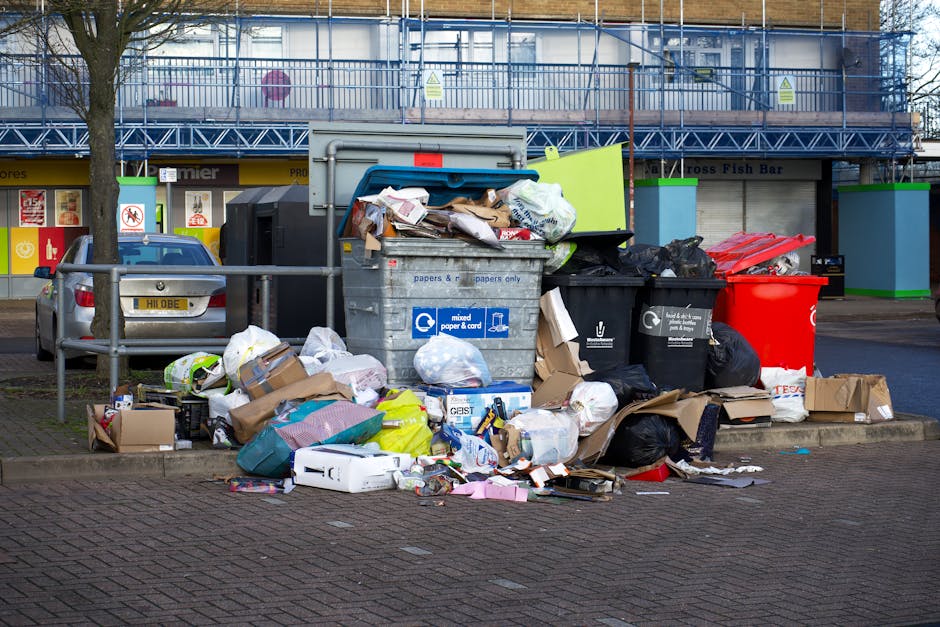
Same-day office rubbish removal for Brent Cross businesses

If your office in Brent Cross is suddenly full of broken chairs, boxed-up paperwork, old monitors, or a mountain of packaging after a refit, you do not need the day to spiral. Same-day office rubbish removal for Brent Cross businesses is the practical answer when clutter starts slowing people down, blocking walkways, or making a space feel messy before clients arrive.
It is not just about "getting rid of rubbish." It is about restoring order quickly, keeping staff focused, and avoiding the awkward shuffle around piles that somehow seem to appear overnight. In our experience, these jobs often become urgent at the least convenient moment: after a clearance, before a lease handback, or right when the office is busiest. This guide explains how same-day office clearance works, what to expect, what to avoid, and how to make a fast clearance feel calm rather than chaotic.
Why Same-day office rubbish removal for Brent Cross businesses Matters
Brent Cross businesses operate in a busy part of north London where time, access, and presentation all matter. Offices, showrooms, studios, and small commercial units can fill up fast with unwanted desks, packaging, toner cartridges, filing cabinets, old fixtures, and general mixed waste. Leave it too long, and what starts as a simple tidy-up becomes a real operational problem.
Same-day removal matters because rubbish is never just visual clutter. It can obstruct exits, create trip hazards, make cleaning harder, and slow down every person trying to do their job. And let's face it, nobody wants to sit through a team meeting while staring at a broken cabinet in the corner. It changes the feel of the space immediately.
There is also a business reputation angle. If clients, suppliers, or contractors are arriving later that day, a clean office sends the right message. A neat reception area and clear corridors quietly tell people that the business is organised. It sounds small, but small things add up.
For office managers, facilities teams, and landlords, same-day clearance is often the difference between staying on schedule and losing a day to mess. That is especially true when you are working around move-outs, refurbishments, or last-minute asset changes.
How Same-day office rubbish removal for Brent Cross businesses Works
The process is usually straightforward, but good planning makes it smoother. Most same-day office rubbish removal jobs follow a simple sequence: assess, quote, collect, sort, and dispose responsibly. The exact order may vary slightly, but the logic stays the same.
First, you explain what needs removing. That might include furniture, bagged waste, mixed office rubbish, or bulky items such as conference tables, shelving, and cabinets. A clear description helps avoid delays later. If you can share photos, dimensions, or access notes, even better.
Next comes the quote. For urgent jobs, pricing is typically based on volume, item type, labour required, access, and disposal considerations. If the items are awkward to carry down stairs or need careful dismantling, that may affect the estimate. You can learn more about request formats and quote expectations through pricing and quotes.
On the day, the team arrives, confirms the load, and begins removal. A well-run collection should be tidy and efficient. Good operators separate reusable items, recyclable materials, and general waste where possible. If the job includes desks or chairs, some businesses also combine removal with office clearance or furniture disposal so everything is handled in one pass.
Then the waste is taken away for sorting and processing. Depending on what is being removed, that may involve recycling streams, reuse channels, or general waste disposal. If your business also needs recurring support rather than just one urgent pickup, it can help to look at broader business waste removal options too.
Key Benefits and Practical Advantages
The obvious benefit is speed. Same-day removal gets space back quickly, which is useful when you have a deadline breathing down your neck. But speed is only part of the story.
- Less disruption: staff can keep working without navigating clutter or waiting days for collection.
- Better presentation: reception areas, meeting rooms, and workspaces look ready for people again.
- Safer movement: fewer boxes, cables, and loose items means fewer trip and obstruction risks.
- Faster project turnaround: refits, relocations, and end-of-tenancy jobs can stay on schedule.
- Reduced stress: there is a quiet relief in seeing a room clear out faster than expected. You notice it immediately.
There is also a hidden benefit: better decision-making. Once the clutter is gone, it becomes easier to judge what actually needs replacing, repairing, or rearranging. Teams often make better space decisions after a clearance because the room is visible again. Funny how that works.
For businesses handling a lot of office furniture, pairing a same-day collection with a broader furniture clearance plan can help remove not just waste, but awkward surplus items that are still taking up valuable floor space.
Who This Is For and When It Makes Sense
This service is not only for large companies. It is useful for a wide range of Brent Cross businesses, from compact offices to shared workspaces and commercial premises with limited storage. If you are thinking, "We can probably live with this for another week," that is often the sign you should not.
It makes sense for:
- office relocations and internal moves
- end-of-tenancy clearances
- refurbishment or fit-out projects
- bulky furniture replacement
- archive, paper, or packaging build-ups
- post-event clean-downs
- emergency tidy-ups before inspections or handovers
It is also useful when a business has been running in "temporary storage mode" for too long. You know the type: one spare room becomes a holding bay, then the holding bay becomes a dumping ground, and suddenly no one can open the cupboard door properly. Truth be told, it happens everywhere.
For mixed sites that include back-of-house areas, you may also need support with waste removal for general non-office items, or even builders waste clearance if the office has just come through a refurbishment. That broader view saves time later.
Step-by-Step Guidance
If you want a same-day job to run smoothly, it helps to think like a project manager for ten minutes. Not glamorous, but useful.
- Identify exactly what needs going. Separate office furniture, e-waste, paper, packaging, and general rubbish if you can.
- Check access. Note lifts, parking, loading bays, security entry points, and stair access. A quick message here avoids a lot of back-and-forth.
- Take simple photos. A few clear images help the team judge volume and plan the right vehicle and labour.
- Decide what stays. Be precise. Same-day jobs can get messy if staff are unsure which items are meant to leave.
- Book your slot early in the day. For urgent clearances, mornings usually give you the best chance of completion before the day gets away from you.
- Clear the route. Move small personal items, monitor cables, and anything delicate out of the way before collection starts.
- Confirm disposal expectations. Ask how different waste streams will be handled, especially if you have recyclable materials or furniture to dispose of.
One practical tip: label items with coloured notes if several people are involved. It sounds slightly old-school, but it saves arguments. "Keep," "remove," and "unsure" is usually enough. No need for a committee meeting over a chair.
If you are planning a full office refresh, a same-day pickup can sit neatly alongside office clearance, then finish with a clean sweep so the workspace is ready for the next phase.
Expert Tips for Better Results
Small decisions make a big difference in urgent clearances. Here are the habits that tend to pay off.
- Bundle the work into one visit if possible. Multiple small collections are rarely efficient. If the waste is already there, clear it in one go.
- Be honest about the volume. Underestimating the load can lead to a rushed second visit or awkward pricing changes.
- Separate reusable items early. A chair in decent condition may be handled differently from a broken one.
- Prepare for access issues. Tight corridors, security desks, and limited parking all add time. Mention them up front.
- Keep sensitive material out of the pile. Paper records, hard drives, and branded documents need special attention before anything leaves the office.
Another good habit is to think about what will happen after the rubbish is gone. If the room is still going to be used for storage, maybe it needs shelving. If it is becoming a meeting room, perhaps you need to rethink furniture layout too. Otherwise the clutter has a habit of creeping back. Quietly. Almost disrespectfully.
Where sustainability matters, it is sensible to ask about recycling-led handling and responsible sorting. The page on recycling and sustainability is a useful place to understand the general approach to greener waste handling.
Common Mistakes to Avoid
Urgent clearances go wrong when people rush the planning, not the collection. The actual lifting is usually the easy bit.
- Leaving approval too late: If decision-makers are unavailable, the job stalls. Get sign-off early.
- Mixing secure items with general waste: Documents, badges, IT equipment, and confidential materials should be separated first.
- Not measuring access: A sofa-style chair may fit through a wide doorway, but a dismantled cabinet still needs enough corridor space.
- Ignoring parking and loading restrictions: In busy London areas, this can derail a perfectly good plan.
- Forgetting duty-of-care basics: Businesses should know where their waste is going and who is handling it.
One mistake that catches people out surprisingly often is assuming every item can stay assembled. Sometimes it can. Sometimes it really cannot. A bulky meeting table that needs dismantling on site can add time, noise, and an extra bit of dust you did not budget for. Not a disaster, just a detail worth knowing.
Tools, Resources and Recommendations
You do not need fancy systems to organise a same-day clearance, but a few simple tools help enormously:
- a phone camera for room photos
- a short item list or inventory
- labels or sticky notes for keep/remove decisions
- a floor plan or rough sketch for larger offices
- basic access notes for reception, parking, and loading points
For larger or more complex premises, it can help to keep a running waste plan rather than waiting for a problem to build up. That is where general business waste removal support becomes useful, especially if your office routinely generates packaging, documents, and bulky offcuts.
If the job is more about clearing retained items than daily waste, it may also help to read up on insurance and safety considerations, particularly where valuables, fragile items, or awkward lifting are involved. That is not overcautious. It is sensible.
Law, Compliance, Standards, or Best Practice
Office rubbish removal is not just a logistical task. In the UK, businesses still need to think about responsible waste handling, safe access, and proper transfer of waste to an authorised carrier. The exact compliance steps vary depending on the waste type, but the underlying principle is simple: your business should know what it is handing over and who is receiving it.
For office settings, best practice usually includes:
- keeping confidential documents separate before removal
- making sure electrical items are handled appropriately
- avoiding unsafe manual lifting or blocked fire routes
- using a provider that can explain how waste will be sorted and disposed of
- keeping records where your own internal policies require them
Health and safety matters too. If clearance happens while staff are onsite, routes should stay clear and the team should know where not to stand. The whole point is to reduce disruption, not create a new obstacle course.
For businesses that want a closer look at internal standards and practical expectations, health and safety policy and terms and conditions pages are useful reference points. They help set expectations around what can be removed, how collections are arranged, and how jobs should be carried out.
Options, Methods, or Comparison Table
Different clearances suit different situations. A same-day collection is ideal when time is tight, but it is not always the only option. Here is a simple comparison to help you decide.
| Option | Best for | Typical advantage | Possible drawback |
|---|---|---|---|
| Same-day office rubbish removal | Urgent clutter, deadlines, sudden clean-outs | Fast, responsive, minimal delay | Needs quick preparation and clear access |
| Planned office clearance | Refits, relocations, staged removals | More time to organise categories and access | Not suitable if the office must be cleared immediately |
| Regular business waste removal | Ongoing routine waste and packaging | Useful for repeat collections | Not designed for bulky one-off clearances |
| Furniture-specific disposal | Desks, chairs, cabinets, shelves | Helpful when bulky items are the main issue | May need a wider clearance plan for mixed rubbish |
If the office has a lot of leftover furniture, combining methods is often the most efficient route. In other words, don't force one service to do a job that really needs two. It saves time, and usually sanity too.
Case Study or Real-World Example
Imagine a Brent Cross marketing office finishing a minor refurbishment on a Tuesday morning. New desks are arriving by midday, but the old units, packaging, and a stack of broken task chairs are still in the way. Reception needs to stay open, staff are trying to work around the mess, and the project manager has that slightly hollow look of someone who has realised the calendar was lying.
They book a same-day collection. Photos are sent early, access notes are shared, and the team clears the route before the vehicle arrives. The removal crew takes away the old furniture, mixed rubbish, and several bags of office waste in one visit. The room is left ready for the installers. No drama. No extra day lost.
That kind of job is exactly where same-day service earns its keep. The win is not just speed; it is the way speed protects the rest of the day. Meetings still happen, deliveries still arrive, and the office does not feel like a storage unit with laptops in it.
Practical Checklist
Use this checklist before you book:
- Identify everything that needs removing.
- Separate confidential papers and sensitive items.
- Take a few clear photos of the waste.
- Check access, stairs, lifts, and parking.
- Confirm who will authorise the job.
- Decide whether furniture, e-waste, and general rubbish are all included.
- Ask about recycling and disposal handling.
- Make sure walkways are clear before collection begins.
- Keep staff informed so nobody gets surprised mid-clearance.
- Review the space after the removal and decide what needs to happen next.
If you are dealing with larger items that are not strictly office waste, you may also find related services useful, such as furniture clearance or furniture disposal. That is often the cleanest way to handle mixed office contents without dragging the job out.
Get a free quote today and see how much you can save.
Conclusion
Same-day office rubbish removal for Brent Cross businesses is really about keeping momentum. It helps you protect time, protect space, and keep the business looking and functioning as it should. When an office is full of clutter, everything feels slightly heavier. When it is cleared, the whole place breathes easier.
Whether you are clearing a single room, tidying after a refurbishment, or dealing with a last-minute handover, the right approach is simple: prepare well, communicate clearly, and choose a removal option that fits the real size of the job. That way, the day stays manageable instead of turning into one of those days.
And honestly, that calm, reset feeling after the last bag leaves the building? Hard to beat. You notice it in the silence. In the light. In the fact that people can walk without sidestepping a printer box.
Frequently Asked Questions
What counts as same-day office rubbish removal?
It means waste is collected and removed on the same day you book, subject to availability, access, and the size of the load. It is ideal for urgent clutter, office moves, and quick turnaround jobs.
Can you remove both office furniture and general rubbish in one visit?
Often, yes. Many businesses combine bulky items with bagged office rubbish so everything is cleared together. If you have a lot of furniture, it may be worth looking at office clearance or furniture-specific services alongside the general waste collection.
How much notice do Brent Cross businesses need to give?
For same-day jobs, the earlier you enquire, the better. Morning bookings tend to offer the best chance of completion, especially if access or parking needs planning.
What types of office waste are usually removed?
Typical items include desks, chairs, cabinets, packaging, paper waste, shelving, filing furniture, and mixed office rubbish. Sensitive records and certain electrical items should be separated before collection.
Do I need to prepare the office before collection?
Yes, a little preparation helps a lot. Clear access routes, identify items to remove, label anything that stays, and make sure someone is available to confirm the load on arrival.
Is same-day office rubbish removal suitable for small businesses?
Absolutely. Small offices often benefit most because they usually have limited storage space. Even a few bulky items can make a compact workspace feel cramped very quickly.
What happens if my office has recycling-heavy waste?
A responsible provider should sort recyclable materials where possible. If sustainability is important to your business, ask how the waste will be handled and whether items will be separated appropriately.
Can same-day removal help before an office handover or inspection?
Yes. It is one of the best uses for the service. When a lease end, inspection, or contractor handover is looming, same-day removal can keep the schedule intact.
What if the waste includes bulky furniture that needs dismantling?
That is common. Some items can be taken as they are, while others may need dismantling on site. It is best to mention this in advance so the team arrives prepared.
How do I know the waste is being handled responsibly?
Ask how items are sorted, what happens to reusable materials, and whether the provider follows sensible recycling and safety practices. It is reasonable to ask those questions, and any good operator should be able to answer them clearly.
Can same-day clearance be arranged for a building with tricky access?
Usually, yes, but access details matter a lot. Narrow stairwells, limited parking, and controlled entry points should all be shared before the booking is confirmed.
What is the main benefit of using a same-day service instead of waiting?
The big advantage is keeping your business moving. Delays cost time, and clutter can slow work, affect presentation, and create practical problems. Same-day removal reduces that pressure fast.
For businesses that want to understand more about service standards, payment arrangements, or company background, the site's about us, payment and security, and complaints procedure pages may also be helpful. A little extra clarity never hurts.